

The future of utilities: People, process and infrastructure
Published: 12 November 2026
Every day, millions of people rely on essential services without giving much thought to what sits behind them. Clean water flows from the tap, homes and businesses stay connected to energy, and communities depend on complex networks of infrastructure that simply need to work.
Yet infrastructure doesn't sustain itself. Behind every asset, network and system are people making decisions, solving problems, and managing risk. Whether they're maintaining substations, operating treatment works, responding to incidents, or planning future investment, it's people who ultimately turn infrastructure into reliable services.
As the utilities sector faces growing demands and increasing complexity, that human element has never been more important.
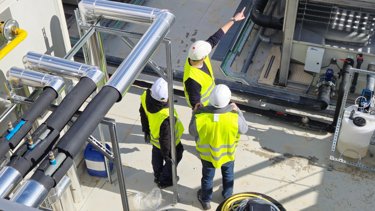
More than an infrastructure challenge
Across the water and energy sectors, organisations are navigating a delicate balancing act. Water companies are under pressure to improve environmental performance, strengthen resilience, and deliver ambitious investment programmes. Energy companies, meanwhile, are working to modernise ageing assets, support the transition to lower-carbon energy systems, and maintain reliability in an increasingly complex operating environment.
These challenges are often described as infrastructure problems requiring infrastructure solutions. Yes, new assets, digital technologies, and major investment programmes are important – and they'll play a vital role in shaping the future of the sector. However, infrastructure alone won't deliver the outcomes organisations are striving for. Success depends on having the right people and processes in place to ensure investments turn into actual improvements.
People remain the sector's most valuable asset
When discussions focus on infrastructure, the contribution of people can sometimes disappear into the background. Yet some of the biggest risks and opportunities facing utilities today are closely linked to workforce capability.
Across the sector, experienced engineers, operational specialists and technical experts are approaching retirement, taking with them decades of practical knowledge built through real-world experience. At the same time, organisations are being asked to embrace new technologies, manage increasing volumes of data, and navigate evolving regulatory expectations. That's a significant challenge for any workforce, particularly when skills shortages affect many parts of the industry.
Developing new skills, transferring knowledge, and building confidence in the next generation of professionals is no longer simply a workforce issue. It's increasingly becoming a resilience issue. The organisations that succeed will be those that recognise people aren't just part of the solution; they're the foundation upon which every other improvement is built.

Good processes create confidence
Of course, people perform best when they're supported by clear and effective processes. While governance frameworks, assurance activities, and operational controls rarely attract the same attention as large infrastructure projects, they often have an equally significant impact on performance.
Without those frameworks, even the most capable people and most advanced infrastructure can struggle to deliver their full potential.
Bringing the pieces together
Perhaps the biggest mistake organisations can make is treating people, process and infrastructure as separate priorities. In reality, each one depends on the others. New infrastructure needs skilled people that understand it. People need effective processes to make sound decisions and manage risk. Processes rely on accurate information generated by well-managed assets.
The organisations best placed to meet the challenges ahead will be those that understand these connections and invest accordingly. Long-term success rarely comes from focusing on a single part of the puzzle. It comes from creating the right balance between really capable people, effective processes, and resilient infrastructure.
We see this across the water and energy sectors every day. While infrastructure may be the most visible part of the equation, it's the combination of people, process and infrastructure working together that creates resilience, drives performance, and keeps essential services running when it matters most.
Latest resources
 Insights
The future of utilities: People, process and infrastructure
 Insights
Defending AMP8 investment decisions: What water companies can learn from the gas industry
 Insights
Why AMP8 needs a new mindset
 Insights
Why asset intelligence will decide who succeeds under AMP8 and PR29
 Insights
How DSEAR training supports workforce resilience
 Insights
What DSEAR training really needs today: Moving beyond compliance to create operational resilience
 Insights
Net-zero in industry: The challenges that matter, and the people facing them
 Insights
The value of DSEAR: Addressing today’s risks to plan for tomorrow
 Insights
Downstream of the ECV: The quiet corner of gas infrastructure that needs our attention
 Insights
From vulnerable sites to network‑wide compliance: Creating a DSEAR blueprint
Here to achieve, validate and demonstrate compliance
Our expert consultants are available to ensure compliant and effective processes for asset design, build, maintenance, and operation.
Contact our experts