

Net-zero in industry: The challenges that matter, and the people facing them
Published: 22 May 2026
Across highly regulated industrial and commercial sectors, the commitment to decarbonise is no longer up for debate. Net-zero targets are set, sustainability strategies approved, and there’s scrutiny from every angle – customers, regulators, investors and others.
So, what is holding things up? For many organisations, the hardest part starts well before delivery: at concept stage, where ambition has to be translated into something that is technically sound, compliant and deliverable. It’s also here that organisations need (but rarely have) enough clarity to make confident investment decisions and develop a reliable view of their total expenditure (TOTEX) over an asset’s life.
At the same time, this transition is being experienced in real time by the people responsible for delivering it. Teams are adapting to new technologies, evolving standards and different ways of working, often while maintaining business‑as‑usual operations. Supporting their transition, as well as the technical solution, is an important part of making change stick.
For such operators in regulated environments on the road to net-zero, we consistently see five challenges shape their decarbonisation thinking early on.
1. Turning big goals into compliant, manageable engineering
Net-zero ambitions are often expressed in abstract terms: timelines, emissions reductions, intensity metrics. Concept engineering is different. It focuses on what physically changes on site. Which systems are most affected? What stays, what is replaced, and what can realistically be adapted? What about the people?
In regulated facilities, legacy assets, safety cases and permits can significantly limit options from day one. Early, structured engineering input – such as our design process management and technical assurance – helps ensure concepts are grounded in reality, proportionate in cost, and able to stand up to regulatory scrutiny.
This clarity strengthens the technical solution and gives decision‑makers the confidence to invest, because they’ve got a clearer understanding of whole‑life costs. Alongside this, working closely with operational teams during early development builds familiarity and confidence in what’s changing, reducing friction later in delivery.
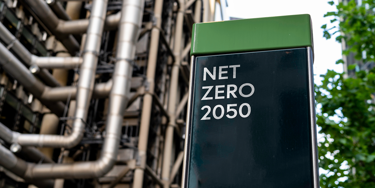
2. Choosing technologies in a tightly governed landscape
There’s no shortage of low‑carbon technologies to consider: electrified heat, hydrogen transition, energy storage, on-site and hybrid generation.
The challenge in regulated industries is not availability – it’s suitability, assurance and long‑term compliance. Will a technology meet regulatory expectations? Can performance and safety be evidenced over its operating life? How adaptable will it be as regulation evolves?
Independent technical review, risk‑based assessment and staged assurance – all areas where we already supports clients – enable organisations to make informed choices without locking themselves into unnecessary risk. Just as importantly, these decisions are not made in isolation. Engineering, operations and compliance teams all need to understand and stand behind the chosen pathway. Taking a collaborative, transparent approach helps embed knowledge within the organisation as decisions are made, not afterwards.
3. Balancing carbon reduction with risk, cost and continuity
Decarbonisation is rarely a like‑for‑like swap, particularly in regulated environments. Changes often affect core processes, utilities, controls and layouts, all of which must continue to meet compliance requirements. For many operators, any downtime brings regulatory, financial and reputational risk. Concept engineering must therefore consider not just carbon savings, but operability and effective phasing.
Our focus on safe systems of work, constructability and operational resilience supports this approach. It helps organisations understand trade‑offs more clearly, supporting better investment decisions and a more complete view of both short‑term costs and long‑term performance.
We’ve witnessed that maintaining continuity is not just about systems – it’s about people. Supporting site teams through phased change, and ensuring they’re confident in new processes or technologies as they are introduced, is key to sustaining safe and reliable operations.
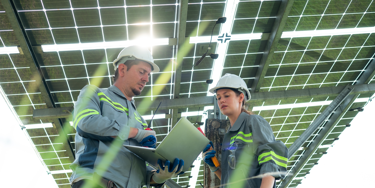
4. Understanding regulation at the energy–water interface
Energy and water are deeply interconnected, yet still often planned in isolation. Electrification, new heating systems, cooling strategies or hydrogen production all change water demand, treatment needs and discharge profiles. In regulated industries, these changes can trigger permitting challenges or compliance risks. In tandem, water efficiency can directly reduce energy use and emissions.
Importantly, water is becoming an increasingly critical constraint, particularly in large urban developments, where supply pressures are now very real. This elevates water usage to a central sustainability concern, not just an operational one.
As part of the wider Adler & Allan Group, we work alongside water and environmental specialists to help clients consider these interdependencies early. This approach not only improves technical outcomes, but gives teams confidence in navigating what is becoming a much more interconnected regulatory landscape.
5. Aligning stakeholders under regulatory pressure
Net-zero programmes bring together engineering, operations, sustainability, finance and compliance teams – each with different priorities and concerns. Add external scrutiny and evolving regulation, and alignment is tricky.
Clear concept engineering, supported by structured governance and documentation, helps create a shared narrative – one that stakeholders can understand, debate, support and act on. This is essential for building unified confidence in investment decisions and demonstrating that proposals are both technically compliant and economically sound. It helps bring people with you on the journey, creating a sense of shared direction in what can otherwise feel like constant, exhausting change.
Having worked alongside clients in similarly complex transitions, we understand the importance of not only delivering the technical solution, but supporting the people making it work in practice – creating ability, confidence and trust in new projects.
Decarbonisation in regulated industries is no longer about intent – it is about controlled, compliant execution. The quality of early‑stage concept engineering often determines whether net-zero plans progress smoothly or stall under regulatory and operational pressure. And as expectations rise around both energy and water resilience, treating them separately doesn’t cut it anymore – they need to be tackled together from day one.
Ensuring that the people delivering these changes are supported, informed and confident should never be overlooked. In an environment where technologies, requirements and ways of working continue to evolve, people can make the difference between plans that look good on paper and outcomes that actually work in the field.
Latest resources
 Insights
Why asset intelligence will decide who succeeds under AMP8 and PR29
 Insights
How DSEAR training supports workforce resilience
 Insights
What DSEAR training really needs today: Moving beyond compliance to create operational resilience
 Insights
Net-zero in industry: The challenges that matter, and the people facing them
 Insights
The value of DSEAR: Addressing today’s risks to plan for tomorrow
 Insights
Downstream of the ECV: The quiet corner of gas infrastructure that needs our attention
 Insights
From vulnerable sites to network‑wide compliance: Creating a DSEAR blueprint
 Insights
Intelligence in asset management: Driving clearer decisions in the gas industry
 Insights
EUSR training: Creating safety and resilience in utilities
 News
NewsQEM secures EUSR Approved Provider certification
Here to achieve, validate and demonstrate compliance
Our expert consultants are available to ensure compliant and effective processes for asset design, build, maintenance, and operation.
Contact our experts