

How DSEAR training supports workforce resilience
Published: 3 September 2026
DSEAR training is often viewed as a compliance requirement, but its value extends beyond satisfying regulatory expectations. In today's energy and water sectors, effective DSEAR training plays a critical role in building workforce resilience, helping organisations retain knowledge, develop competence, and adapt to an increasingly complex risk landscape.

Preserving critical industry knowledge
One of the biggest challenges facing utilities is the loss of experienced personnel. As skilled engineers, technicians and operational specialists retire, organisations risk losing decades of practical knowledge. Good DSEAR training helps bridge this gap by transferring real-world experience to the next generation.
Rather than focusing solely on legislation and definitions, training should use practical examples, lessons learned, and industry-specific scenarios to explain how hazardous atmospheres develop and how risks are effectively managed. This ensures knowledge is retained within the business rather than leaving with individuals.
Building competence, not just awareness
Effective DSEAR training also builds competence, in addition to compliance. Too many courses concentrate on regulations, terminology and assessments, leaving learners with a certificate but limited understanding of how to apply the principles in practice.
A resilient workforce needs more than awareness. Personnel must be able to identify hazardous situations, understand the reasoning behind control measures, contribute to risk assessments, and make informed decisions when conditions change. When people understand the 'why' behind DSEAR requirements, they’re far better equipped to respond safely to real challenges.
Reducing reliance on key individuals
Workforce resilience also depends on reducing reliance on a small number of subject matter experts. In many organisations, critical DSEAR knowledge usually sits with just a handful of experienced individuals. This creates vulnerabilities when people retire, move roles or leave the business.
High-quality training broadens understanding across a wider group of employees, creating a larger pool of competent personnel capable of supporting safe operations, project delivery and compliance activities. This strengthens organisational resilience and reduces dependence on key individuals.
Strengthening safety culture and decision-making
Workforce resilience is about technical knowledge, confidence, judgement and behaviour. The best DSEAR training strengthens safety culture by helping people understand the real-world consequences of failures and the importance of maintaining effective controls.
When employees recognise the connection between compliance, operational performance and public safety, they become more engaged participants in risk management.
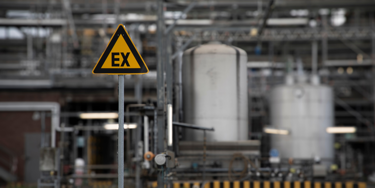
Why the trainer matters
Generic training providers may understand the regulations, but often lack the practical experience of applying DSEAR within complex utility environments. There is a significant difference between teaching regulations from a presentation and teaching them from years of experience working on live gas and water infrastructure.
We believe workforce resilience is built through practical learning delivered by industry experts. Our trainers bring direct experience from the highly regulated gas and water sectors, providing delegates with relevant insights, real-world examples, and a practical understanding of emerging industry challenges.
Combined with the wider expertise of our parent company Adler & Allan in water resilience, climate adaptation, environmental risk and energy transition, we are uniquely positioned to deliver DSEAR training that prepares organisations for both compliance and the future
Creating a workforce fit for tomorrow
The best DSEAR training helps build the knowledge, confidence and competence needed to keep critical infrastructure safe, resilient and operational in a rapidly changing world.
In an era defined by technological change, climate pressures, increasing regulatory scrutiny and growing skills shortages, that resilience may prove to be one of the most valuable outcomes training can deliver.
Latest resources
 Insights
Why AMP8 needs a new mindset
 Insights
Why asset intelligence will decide who succeeds under AMP8 and PR29
 Insights
How DSEAR training supports workforce resilience
 Insights
What DSEAR training really needs today: Moving beyond compliance to create operational resilience
 Insights
Net-zero in industry: The challenges that matter, and the people facing them
 Insights
The value of DSEAR: Addressing today’s risks to plan for tomorrow
 Insights
Downstream of the ECV: The quiet corner of gas infrastructure that needs our attention
 Insights
From vulnerable sites to network‑wide compliance: Creating a DSEAR blueprint
 Insights
Intelligence in asset management: Driving clearer decisions in the gas industry
 Insights
EUSR training: Creating safety and resilience in utilities
Here to achieve, validate and demonstrate compliance
Our expert consultants are available to ensure compliant and effective processes for asset design, build, maintenance, and operation.
Contact our experts