

What DSEAR training really needs today: Moving beyond compliance to create operational resilience
Published: 19 August 2026
In today's utility landscape, DSEAR training can’t afford to be a tick-box exercise. The Dangerous Substances and Explosive Atmospheres Regulations (DSEAR) remain a cornerstone of safety and compliance, while the context in which organisations actually operate has changed dramatically. Big factors such as energy transition, climate change, ageing infrastructure, workforce challenges, regulatory scrutiny, and constrained investment are all reshaping the risks faced by the energy and water sectors. Training needs to evolve alongside it; if it doesn't, organisations risk preparing people for yesterday's hazards rather than tomorrow's realities.

The gap between certification and competence
DSEAR training often focuses heavily on legislation, definitions, zoning principles, and theoretical compliance requirements. While these fundamentals remain essential (and always will), many courses stop right there. Learners leave with a certificate, but without a deeper understanding of how DSEAR intersects with the practical challenges they face every day in the field.
New risks emerging faster than training evolves
The risk landscape is becoming more complex with energy networks adapting to support decarbonisation, hydrogen readiness, and alternative fuels. Water companies are balancing resilience, environmental performance, and asset reliability under increasing public and regulatory scrutiny. Across both sectors, operators are managing infrastructure that may have been designed decades ago, while also introducing new technologies and operating models into them. These changes create new interfaces, new risks, and new questions that generic training often fails to address. Our expertise in the gas and water sectors, alongside our involvement in hydrogen transition and infrastructure compliance, places us at the centre of these industry developments.

Why DSEAR must be connected to operational reality
As well as explain regulations, a modern DSEAR training programme must also help people understand how DSEAR assessments support operational decision-making, asset management, maintenance strategies, and resilience planning. Delegates need to understand how hazardous area classification changes over the lifecycle of assets, how climate-related events can influence risk profiles, how ageing infrastructure can create unforeseen hazards, and how to balance safety, compliance, and operational priorities.
Bridging the utility sector skills gap
The growing skills challenge facing utilities further reinforces the need for better training. Significant portions of the workforce are approaching retirement, while new entrants often arrive with less practical experience of hazardous installations. In this environment, the quality of training becomes increasingly important. Learners need access not only to theory, but to real-world lessons learned, practical examples, and industry case studies that bring the regulations to life.
Industry experience makes the difference
Trainers may understand the regulations, but they may not fully understand the environments in which those regulations are being applied. There is a significant difference between teaching DSEAR from a textbook and teaching it from years of hands-on experience delivering projects, conducting assessments, managing assets, and navigating regulatory expectations within highly regulated utility sectors.
Training delivered by practitioners, not generalists
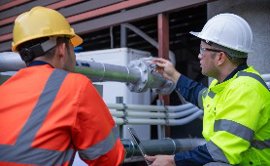
Our training is delivered by industry experts who understand the practical realities of gas, water, and utility infrastructure because they have lived them. They understand how compliance requirements translate into operational decisions and how emerging industry challenges influence risk management. This allows us to provide training that is relevant, current, and grounded in real operational experience.
The strength of Group expertise
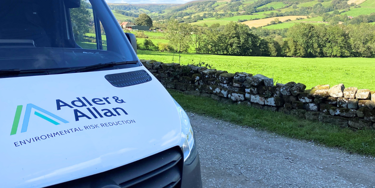
As part of the Adler & Allan Group, we are also able to draw upon broader expertise spanning water resilience, environmental protection, climate adaptation, infrastructure management, and energy transition.
Adler & Allan's focus on helping organisations tackle environmental challenges and improve critical infrastructure resilience provides a valuable perspective that enriches our training programmes.
Building a workforce ready for tomorrow's risks
Organisations that will succeed are those that move beyond compliance alone and develop a workforce capable of understanding risk in a rapidly changing world. Training must connect regulation with reality, theory with application, and compliance with resilience.
That's what industry needs today and that's exactly what we deliver.
Latest resources
 Insights
Why AMP8 needs a new mindset
 Insights
Why asset intelligence will decide who succeeds under AMP8 and PR29
 Insights
How DSEAR training supports workforce resilience
 Insights
What DSEAR training really needs today: Moving beyond compliance to create operational resilience
 Insights
Net-zero in industry: The challenges that matter, and the people facing them
 Insights
The value of DSEAR: Addressing today’s risks to plan for tomorrow
 Insights
Downstream of the ECV: The quiet corner of gas infrastructure that needs our attention
 Insights
From vulnerable sites to network‑wide compliance: Creating a DSEAR blueprint
 Insights
Intelligence in asset management: Driving clearer decisions in the gas industry
 Insights
EUSR training: Creating safety and resilience in utilities
Here to achieve, validate and demonstrate compliance
Our expert consultants are available to ensure compliant and effective processes for asset design, build, maintenance, and operation.
Contact our experts