

Regulatory confidence is built in the field, not the boardroom
Published: 24 November 2026
The utilities sector has never faced greater pressure to deliver. Across energy and water, organisations are balancing major infrastructure investment, ageing assets, net-zero ambitions, digital transformation, and increasing customer expectations – all while operating under intense regulatory scrutiny.
In response, most organisations are strengthening governance, controls and, reporting. However, real regulatory confidence isn’t built just through policies, procedures, and data; it's built in the field.

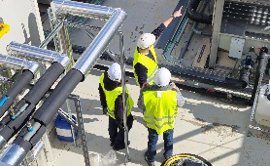
The biggest compliance risks are hardly ever traced to the boardroom. They emerge during project delivery, maintenance activities, contractor management, and the countless day-to-day decisions made by the people responsible for keeping critical infrastructure running. That's why maintaining regulatory confidence is much more than demonstrating compliance. It's about creating confidence that your people, processes, and assets are working together as intended.
The true test of compliance is on site
Most utilities have well-defined processes, policies, and procedures. But the real challenge is ensuring they're applied consistently across large organisations, multiple sites, and complex supply chains.
A procedure may look good on paper, but what happens when a project team is under pressure to meet deadlines? When contractors are working hard across multiple frameworks? When stretched operational teams are balancing competing priorities? This is where compliance succeeds or fails.
Regulators are increasingly interested not just in what processes exist, but in how those processes shape behaviours on the ground. Can organisations demonstrate that governance is translating into actions on site? Can they show that people understand their responsibilities, challenge issues when they crop up, and still make good decisions when things are really tough?
The true test of compliance isn't what's written in a policy document. It's whether people can confidently make the right decisions when they're faced with real-world challenges – even at quarter to five on a sodden Friday evening after a rough week in the field.
Assurance is built on hundreds of small actions
For many utilities, this is driving a shift from traditional compliance approaches towards a stronger focus on assurance.
Rather than relying solely on periodic audits or retrospective evidence gathering, the best companies are embedding assurance throughout the asset lifecycle. They're recognising that assurance is as much about their people culture and behaviours as it is about systems and controls.
Alongside clearer accountability, stronger governance, and better-quality data, they're fostering environments where people can feel safe and confident about speaking up, sharing lessons learned, and raising concerns before they escalate into larger issues.
Because in practice, assurance is often built through hundreds of small actions: reporting an issue early, questioning incomplete information. challenging assumptions, taking the time to follow a process properly when deadlines are tight. These behaviours may not always be visible, but they're often the strongest indicators that an organisation is genuinely in control.

Compliance saves people time
There can be a perception that compliance slows progress. In reality, the opposite is often true. When requirements are understood, people's responsibilities are clear, and assurance is embedded into everyday ways of working, teams spend less time reacting to issues, correcting errors, and recording findings.
Instead, they can focus their efforts on delivering successful projects, maintaining asset performance, and achieving operational objectives. The organisations that do well are often those that have created a culture where compliance isn't viewed as somebody else's responsibility, it's part of how work is planned, communicated, delivered, and improved. Good compliance doesn't sit alongside delivery – it enables it.
Building regulatory confidence in the field
As the utilities sector continues to navigate eye-watering levels of investment and change, regulatory confidence will more and more be defined by an organisation's ability to demonstrate control right across its operations. Not just in reports and audits, but in the daily decisions made by engineers, project managers, operators, and contractors.
Because regulatory confidence isn't built in the boardroom. It's built far away in the field, where real people bring their expertise to challenge assumptions, raise concerns, and make countless small decisions that protect things like operational performance and regulatory integrity. When organisations create the conditions for these people to thrive, compliance becomes a source of confidence, resilience, and better delivery. And that's where true regulatory confidence is won or lost.
Latest resources
 Insights
Regulatory confidence is built in the field, not the boardroom
 Insights
The future of utilities: People, process and infrastructure
 Insights
Defending AMP8 investment decisions: What water companies can learn from the gas industry
 Insights
Why AMP8 needs a new mindset
 Insights
Why asset intelligence will decide who succeeds under AMP8 and PR29
 Insights
How DSEAR training supports workforce resilience
 Insights
What DSEAR training really needs today: Moving beyond compliance to create operational resilience
 Insights
Net-zero in industry: The challenges that matter, and the people facing them
 Insights
The value of DSEAR: Addressing today’s risks to plan for tomorrow
 Insights
Downstream of the ECV: The quiet corner of gas infrastructure that needs our attention
Here to achieve, validate and demonstrate compliance
Our expert consultants are available to ensure compliant and effective processes for asset design, build, maintenance, and operation.
Contact our experts