

Assuring DSEAR compliance of critical backup power systems for major data centre operator
Published: 12 May 2026
A major data centre operator, responsible for safeguarding business‑critical services across a portfolio of key UK sites, engaged us as part of their ongoing commitment to high standards of safety, resilience and transparency.
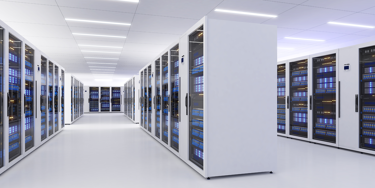
With uninterrupted power supply at the heart of their operations, the organisation had invested heavily in backup power systems. Across ten strategically important sites, large battery banks, together with back-up generation from a mixture of gas and diesel, were providing essential resilience.
The team was already aware that these systems generate hydrogen gas during charging – something that falls squarely under the Dangerous Substances and Explosive Atmospheres Regulations 2002 (DSEAR). Rather than leaving anything to chance, the client asked us to review their arrangements and provide clear assurance that their systems were safe, suitable and compliant.

Framing the challenge
The client’s infrastructure was well designed and well managed. However, they'd identified a familiar issue in long‑established, high‑performing environments: technology evolves quickly, and safety frameworks don’t always keep pace.
This created three clear pain points:
- No formal DSEAR risk assessment specifically addressing battery‑related hydrogen generation had been documented
- Evolving regulatory expectations and audit scrutiny placed greater emphasis on demonstrable compliance
- The operator wanted reassurance that existing controls remained appropriate, proportionate and future proof
Rather than waiting for an incident or an external intervention, the client took a proactive step: commissioning an independent DSEAR assessment to make sure their systems were properly assessed and robust.
Approach and implementation
Our role wasn’t to impose change where it wasn’t needed. Instead, we focused on providing clarity, evidence and reassurance to support an already strong safety culture.
Our consultants worked closely with the client team, carrying out:
- Detailed site reviews across all ten locations
- Direct engagement with operational, engineering and facilities teams
- Review of relevant policies, procedures and system designs
- Examination of real‑world operating conditions, maintenance activities and credible abnormal scenarios
This approach made sure that the assessment reflected how systems are actually used day to day, aligning DSEAR compliance with the realities of modern, resilient data centre operations – not just how things look on paper.
Proportionate and practical DSEAR risk assessment
We produced a tailored DSEAR risk assessment focused specifically on hydrogen generation during battery charging.
The assessment considered:
- The likelihood of hazardous atmospheres forming
- The adequacy of existing ventilation and dispersion arrangements
- Potential ignition sources and access considerations
- Whether additional controls or zoning were genuinely required
By grounding everything in evidence and site‑specific conditions, the assessment remained practical, proportionate, and firmly aligned with current best practice.
Impact and outcomes
The findings were reassuring. The assessment confirmed that the client’s existing arrangements were well thought out and effective across all sites:
- Ventilation systems were sufficient to prevent hydrogen accumulation
- The overall DSEAR risk level was assessed as low
- No additional control measures were required
Rather than uncovering gaps, the work validated the client’s engineering decisions and operational controls – showing they were already doing the right things, and doing them well.
Safer, more compliant, and transparently assured
So, did the project ‘find nothing’? Not at all. The client gained three important outcomes:
- A clear, documented basis of safety aligned with DSEAR requirements
- Strong assurance to support internal governance and external audits
- Confidence that their approach remains aligned with modern safety expectations
By acting early, the operator demonstrated a commitment to continuous improvement and transparency, choosing proactive assurance over reactive compliance.
Why this matters
In modern data centre operations, safety compliance has to support resilience, not compete with it. This project shows how forward‑thinking organisations approach DSEAR: not as a tick‑box exercise, but as a way to build confidence, assurance and transparency.
When done well, DSEAR assessments give teams the headspace to focus on what really matters: keeping critical systems running safely and reliably.
We are proud to support clients who aim to stay one step ahead of regulatory expectations, strengthening safety, compliance and asset performance in a balanced, professional way.
How we can help
If you’re responsible for facilities, infrastructure or safety-critical systems and want clear, proportionate assurance around your own DSEAR obligations, our team can help.
To discuss how we can support your DSEAR project, contact us today.
More of our projects...
 Projects
Assuring DSEAR compliance of critical backup power systems for major data centre operator
 Projects
Assessing and improving security of critical assets and site infrastructure
 Projects
Keeping families warm and feeling safe in multi-occupancy buildings
 Projects
Helping David Hardie Engineering secure certification and recertification for ISO 9001, 14001, and 45001 standards
Here to achieve, validate and demonstrate compliance
Our expert consultants are available to ensure compliant and effective processes for asset design, build, maintenance, and operation.
Contact our experts